.png)
 4 hours ago
24
4 hours ago
24
Good morning. In the wake of the Green party’s victory in the Gorton and Denton byelection, Nigel Farage claimed his party would have won if the vote had been restricted to “British-born voters”. The Greens dismissed the suggestion as “dangerous, racist nonsense”.
But the argument has thrown fresh attention on a little-understood feature of the UK’s electoral system: who is actually allowed to vote. As it stands, some non-UK citizens – including certain Commonwealth nationals – can cast ballots in general elections, while millions of long-term residents cannot.
For today’s newsletter I spoke to Lara Parizotto, executive director of the Migrant Democracy Project, about how the rules work, and why campaigners say the debate risks becoming increasingly heated. First, the headlines.
Five big stories
-
Middle East crisis | Donald Trump has said the war in Iran is “very complete, pretty much”, as the conflict disrupts global oil trade and threatens to engulf the Middle East in a regional war.
-
AI | A multibillion-pound drive to “mainline AI into the veins” of the British economy is riddled with “phantom investments” and shaky accounting, a Guardian investigation has found.
-
UK politics | Ministers need to act more quickly to combat fast-changing threats from technology such as deepfakes, the technology secretary has said, as she warned about the risks women and girls face online.
-
UK news | A woman who alleged she was raped by Andrew Malkinson admitted to police 22 years ago that she “wasn’t too sure it was the right man”, a court has heard. Malkinson spent 17 years in prison for an attack he did not commit in what jurors heard was a “most terrible” miscarriage of justice.
-
Technology | Liverpool and Manchester United have complained to Elon Musk’s X after the Grok AI feature made offensive posts about Diogo Jota and the Hillsborough and Munich disasters. The posts were generated when users asked the AI tool to make hateful posts about the two football teams.
In depth: ‘Millions are not able to participate in the elections around them’
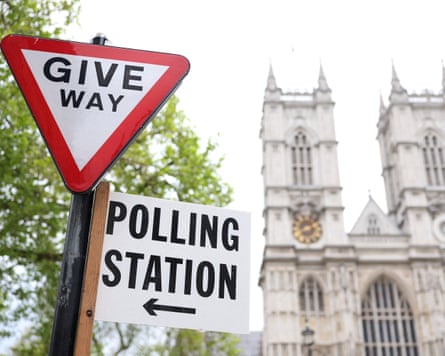
Yesterday was Commonwealth Day, celebrated with pomp and circumstance at Westminster Abbey in the presence of King Charles, who issued a statement for the occasion: “Ours is a remarkable association that spans every ocean and continent. Embracing an extraordinary diversity of culture, language and faith.” That association spans not just trade and cooperation, but also democracy in the UK. The voting rights of those born in the Commonwealth but living here don’t usually make much impact in the news, until Farage’s comments.
“The silver lining for us,” Lara Parizotto tells me of the Reform leader’s comments, “is that, although they are coming from a negative perspective, at least it has got people talking about it.”
Her organisation has been campaigning on the issue of migrant voting rights since 2021, and in that time, she has been surprised to find out how little people – including politicians – understood about the complex framework of who can and can’t vote in different elections in different parts of the UK.
A sharpening of rhetoric
When Parizotto first helped start the campaign, the context was the recent settlement of a Brexit agreement. In the years since, Parizotto says the tone of the debate around migration and democracy has hardened noticeably. “Our work is at the intersection of democracy and immigration,” she tells me. “And both things have become very tough over the last few years.”
Her organisation began campaigning when the last elections bill was going through parliament. At the time, she says, the focus was on expanding voting rights to all residents, regardless of immigration status. This is particularly important for those born in the Commonwealth, who as more and more countries fought for independence from the British empire, shifted from being “British subjects” to “Commonwealth citizens”. As subjects, they had the right to vote.
“We knew that government wasn’t going to do what we were asking – to extend the franchise to all residents in all elections” she says. “But there was some hope then that the right to vote would be extended, and in opposition, Labour were making supportive noises.”
Now, she says, campaigners feel they are increasingly defending the status quo rather than arguing for change. The Guardian’s data journalism team have demonstrated how the language used about immigration in parliament has become more extreme, and last week in the Critic, writer David Shipley argued for disenfranchising Commonwealth citizens in the UK, describing their voting rights as a “a hangover from the empire” and lamenting what he sees as the ability for “foreigners living here temporarily [to] choose our governments”.
“We’re not just campaigning for the right to vote to be extended,” Parizotto tells me. “We feel like we’re now in a position where we have to campaign for the right to vote to be defended as it is.”
How Commonwealth voting actually works
One reason the issue can easily become politicised is that the rules themselves are complicated. The legal category is not simply “Commonwealth citizens”, but “qualifying Commonwealth citizens” – meaning people from Commonwealth countries who have some form of lawful immigration status in the UK. “In essence, it means you have some form of leave to remain,” Parizotto explains. That could include work visas, student visas, refugee status or spousal visas.
The principle dates back more than a century, when people from across the British empire were considered British subjects and therefore eligible to vote. The law evolved, but many of those rights have been retained.
Today, Parizotto estimates there are about 1.2 million Commonwealth citizens living in the UK who are eligible to vote under the current rules. Yet many do not realise they are allowed to do so.
“We often speak to people who say: ‘No, but I’m not British – I can’t vote,’” she says. “And we have to show them the government website to explain that actually, as a Commonwealth citizen, they can.” According to Electoral Commission data, roughly two-thirds of eligible Commonwealth citizens are registered to vote.
A system few people understand
Part of the problem, Parizotto says, is that the UK’s voting rights system has become increasingly difficult to explain. Different rules apply depending on whether someone is a Commonwealth citizen, an EU citizen who arrived before Brexit, or someone who moved to the UK more recently from a country with a bilateral voting agreement.
“It’s really difficult to make it simple,” she says. “You can have an Italian person who arrived in the UK in 2017 who can vote in local elections, but their niece who arrived to study last year can’t vote at all. Meanwhile, a Polish person arriving today can vote locally because Poland has an agreement with the UK.”
That complexity can extend even to political campaigners. “We’ve noticed that politicians don’t always know all these complexities,” she says. “So when they’re out canvassing, they might not know who can and cannot register to vote.”
To add to the complexity, the rules are different in Scotland and Wales, where the franchise has been expanded, from England and Northern Ireland, where it hasn’t.
‘A code word’
The debate intensified after the Gorton and Denton byelection, when the question of migrant voting rights became a political flashpoint.
Parizotto believes the way the issue is framed sometimes masks deeper arguments about identity and belonging.
“If we’re really honest,” she says, “it looks like Commonwealth is being used as the new code word for Muslims. I doubt they are talking about Canadians losing the right to vote.”
As if to prove the point, Nigel Farage’s lengthy article in the Daily Mail griping about the result in Gorton and Denton and pledging to end Commonwealth voting only mentions one Commonwealth country by name: Pakistan.
Parizotto argues that discussions about religion, nationality and immigration are often blurred together in political debate. “You saw headlines about young Muslims turning away from Labour over its immigration policies,” she says. “But being Muslim is not the same thing as being an immigrant.”
The bigger democratic gap
For Parizotto, the focus on Commonwealth voting rights risks overshadowing a larger democratic question: the millions of residents who cannot vote at all.
Across the UK, she estimates, more than four million people who live and work in the country have no vote in general elections – regardless of whether they are working for our public services or paying tax.
“When we talk about issues affecting immigrants but also everyone, there are millions of people who are not able to participate in shaping the elections around them,” she says.
Politicians, she argues, should ultimately focus on persuading voters rather than narrowing the electorate. “There are going to be British Muslims voting in various different ways, and Commonwealth citizens voting in various different ways,” she says. “At the end of the day, the job of politicians is to win voters over with policies that attract them.”
Her conclusion is simple: “We need a democracy that actually allows everyone to vote,” she says. “And, currently, that’s very far from the case.”
What else we’ve been reading
-
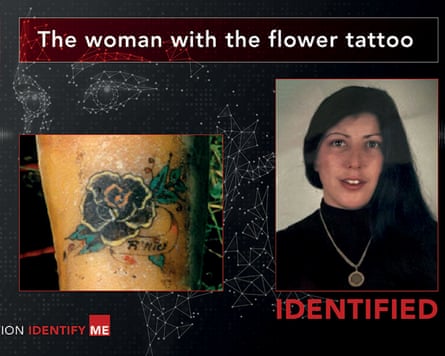
“We want to at least be able to give them their names back,” says Interpol’s Susan Hitchin, in this harrowing read about the team identifying Europe’s forgotten female murder victims (including Rita Roberts, pictured above). Martin
-
Tory-watcher Henry Hill writes on how the Conservatives are adapting to no longer being the default rightwing option. “There is no long-term future for a party that remains in essence a sectional interest party for retirees,” he says, “but it could quite easily lose the (easily angered) older vote without picking up enough support elsewhere to survive.” Charlie Lindlar, newsletters team
-
For Monocle, Rory Jones and Annelise Maynard have a delightful amble visiting 10 of London’s loveliest bookshops with gorgeous accompanying photos. Martin
-
For this week’s edition of their newsletter (sign up here!), the Filter team have put together a quick guide to all the kit you need to refresh your garden this spring. Hori hori soil knife, anyone? Charlie
-
Nicolaia Rips interviews Grace Ives, whose latest single has been an earworm for me. Martin
Sport
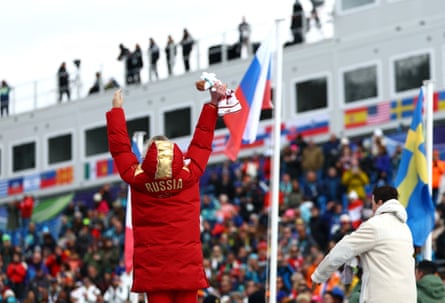
Winter Paralympics | The Russian national anthem has been played at the Paralympics for the first time since 2014 as the skier Varvara Voronchikhina claimed gold in the women’s super-G standing.
Football | West Ham United defender Konstantinos Mavropanos struck the winning spot kick as his side beat visitors Brentford 5-3 in a penalty shootout to book a place in the FA Cup quarter-finals.
Football | Five members of the Iranian women’s football team have been granted humanitarian visas in Australia, with the prime minister, Anthony Albanese, offering assistance to the other players and saying “help is here”.
The front pages
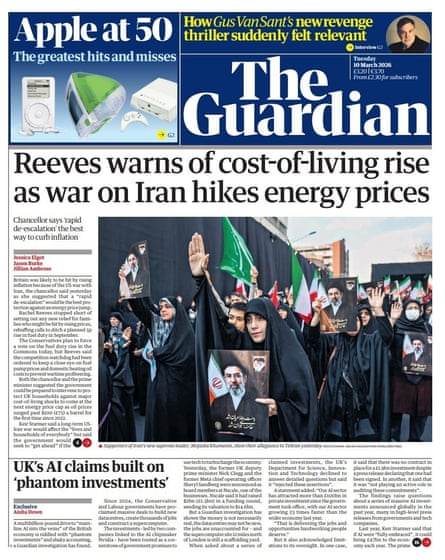
“Reeves warns of cost-of-living rise as war on Iran hikes energy prices” is the Guardian splash. The Mail has “Trump: Iran war is ‘pretty much’ over”, the Times says “Trump: Iran has nothing left and war is nearly over” and the Sun runs “Trump: War is near end”. “Trump: Iran war ‘very complete’” says the Telegraph. Top story at the FT is “G7 ‘stands ready’ to tap oil reserves” and the Mirror splashes on “Cost of war”. The i Paper has “Revealed: Trump dismissed PM’s Iran plea in stormy call”.
Today in Focus
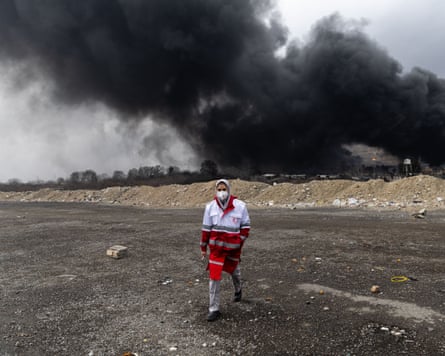
Inside Iran as the bombs fall
Annie Kelly speaks to ordinary Iranians about the attacks on their country, and peace strategist Sanam Naghari-Anderlini explains her fears for the future.
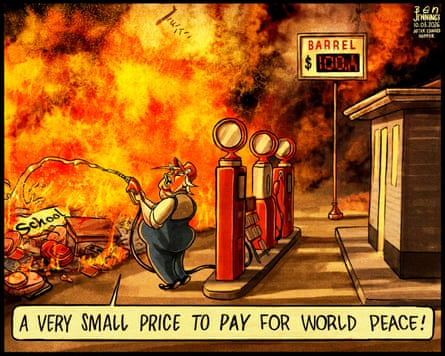
Cartoon of the day | Ben Jennings
The Upside
A bit of good news to remind you that the world’s not all bad
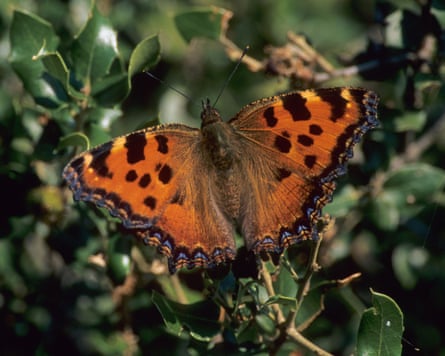
After a flurry of early spring sightings, the large tortoiseshell butterfly (Nymphalis polychloros) has been declared a resident species in the UK – as opposed to a migratory one – for the first time in 58 years.
The tree-dwelling butterfly, whose caterpillars feed on elm, willow, aspen and poplar trees, first reappeared in the UK in significant numbers in 2006 and 2007, but many subsequent sightings have been attributed to unauthorised releases by butterfly breeders aiming to re-establish the species.
The charity Butterfly Conservation is now urging people to log any sightings on the free science app, iRecord, to help build a picture of the butterfly’s distribution and expanding population.
Sign up here for a weekly roundup of The Upside, sent to you every Sunday
Bored at work?
And finally, the Guardian’s puzzles are here to keep you entertained throughout the day. Until tomorrow.







 English (US) ·