.png)
.png) 17 hours ago
32
17 hours ago
32
4 min readNew DelhiMar 7, 2026 08:56 PM IST
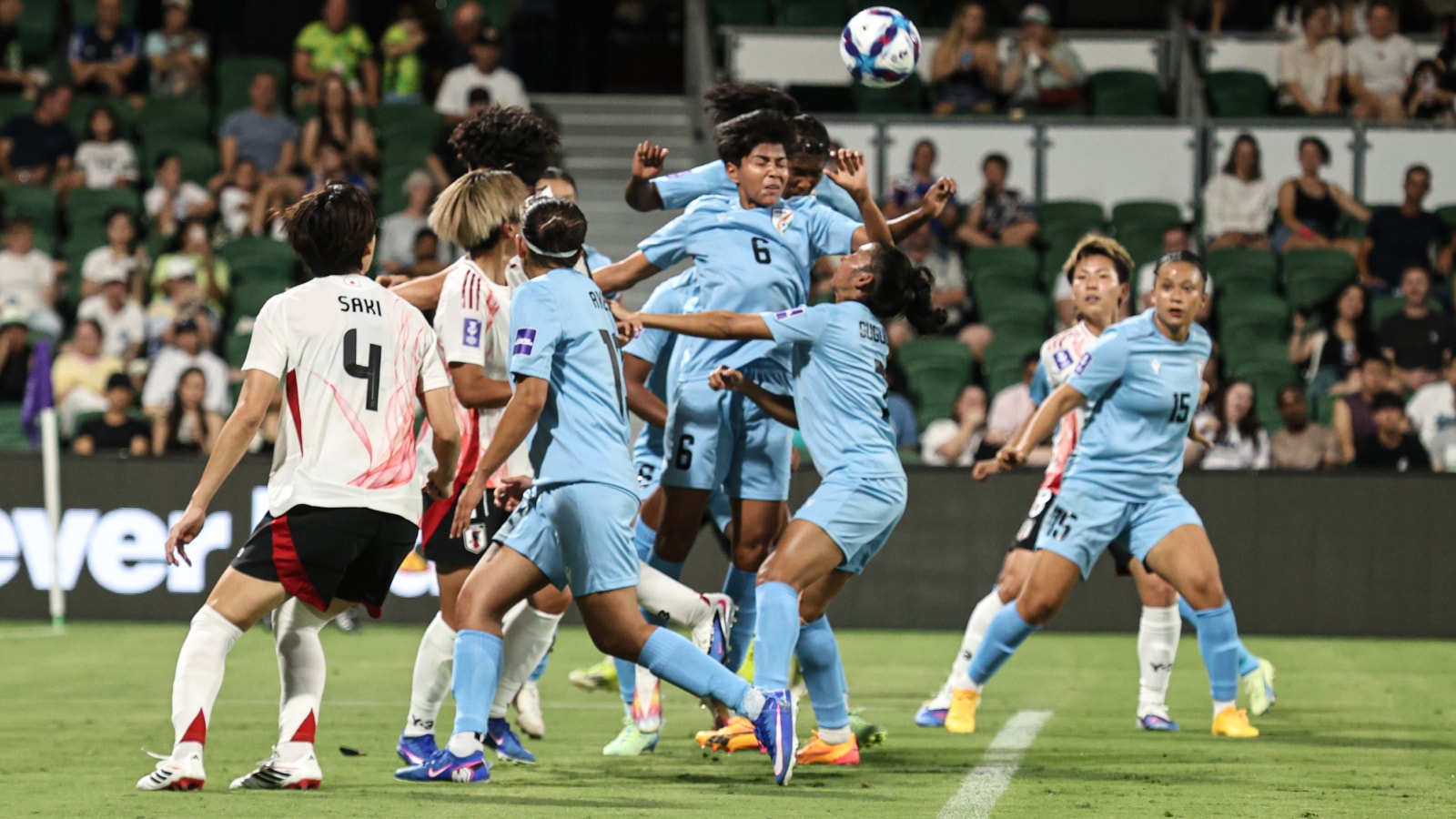 India lost to Japan by 11-0 in the Women's Asian Cup. (PHOTO: AP)
Around the 79th minute of India’s second Group B match against Japan in the 2026 Women’s Asian Cup, coach Amelia Valverde, who had been absent from her technical area for much of the second half, charged out with some angry words, most likely directed at her players after they had lost the ball cheaply. She then walked back, yanked her spectacles off, sat down in her chair in the dugout and buried her face in her hands.
Two minutes later, Japan caught India’s three centre-backs out with a simple ball behind them — for what seemed like the millionth time in the match — and scored their 11th goal of the game. Before all this, around the 65th minute, Japan’s coach Nils Nielsen could be seen lounging in his chair, chatting with fellow members of the coaching staff with a big smile on his face. The contrasting moods of the two coaches during this period pretty much summed up the match at the Perth Rectangular Stadium on Saturday, which Japan won 11-0.
The numbers accompanying that scoreline are just as stark. Japan had nearly 80 percent possession. About 65 percent of the match was played in India’s own box, never mind their half.
ALSO READ | AFC Women’s Asian Cup: Despite Indian resistance, Vietnam take opener; Japan up next
The result reduces India’s chances of qualifying for the quarterfinals to a mathematical miracle, and all but ends any fantastical thoughts of qualifying for the Women’s World Cup.
It’s not the players, or the coaching staff, who had this fantasy though. It was clear that India, ranked 67th in the world, knew right from the first minute that the only way they could keep the damage to a minimum against eighth-ranked Japan was to defend for their lives and frustrate their opponents. India started with a 5-4-1 formation but for all practical purposes they were playing with 10 defenders and a goalkeeper. Even then, Yuzuki Yamamoto scored Japan’s first goal in the fourth minute.
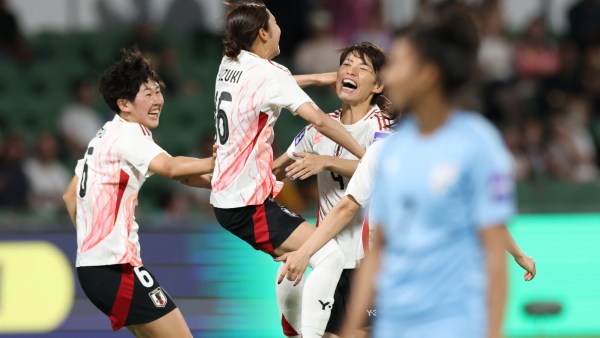 Japan’s Yuzuki Yamamoto celebrates with teammates after scoring her team’s first goal during the Women’s Asian Cup match vs India in Perth. (PHOTO: AP)
Where Valverde could be questioned is that her five-player defence, with three centre-backs in the middle, clearly didn’t work — and yet she never switched things up. The Croatian also chose not to play Sanfida Nongrum or Rimpa Haldar, despite the pair having made the difference after being brought on at half-time in India’s previous match against Vietnam. India could also be accused of giving Japan too much respect, inviting pressure on themselves with clearances and passes into empty spaces from as early as the first ten minutes.
Story continues below this ad
That, though, was always likely to be a symptom of a deeper problem. India had played just one match against 68th-ranked Iran and two against 89th-ranked Nepal since qualifying for the Women’s Asian Cup in July — a far cry from the “10-12 international friendlies” the All India Football Federation had promised.
Japan were never a team India were expected to beat, or even draw against. But some experience of facing higher-level opposition in the buildup could have allowed them to make a better account of themselves. Instead, India arrived underprepared and it showed. The AIFF’s failure to deliver those matches did not cause the 11-0 — Japan’s quality did. But it made the margin of surrender far more difficult to defend.
India next face Chinese Taipei on Tuesday in Sydney.




 English (US) ·