.png)
 2 hours ago
22
2 hours ago
22

 Bristol Water
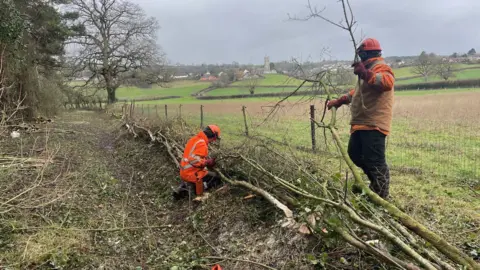
Bristol Water is creating nesting space for birds
A water company is using ancient hedge laying techniques to improve biodiversity near a lake.
Bristol Water said it wants to improve diverse wildlife at Blagdon Lake, a 440-acre reservoir and trout fishery in the Mendip Hills, Somerset.
A Site of Special Scientific Interest (SSSI), the work includes restoring thinning hedgerows by laying trimmed base stems horizontally.
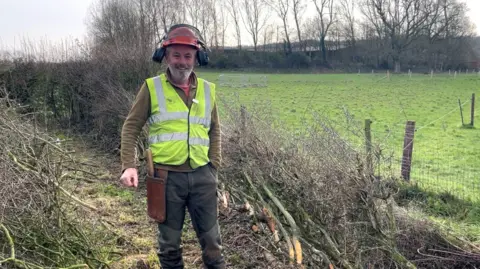
Mike Reed, a hedge laying specialist, who is leading the team, said: "So many of our farmland and countryside birds are endangered, as are hedgehogs, so creating these spaces for them to live and nest in is more important than ever."
Reed added: "Hedge laying is a historical craft with a strong local tradition and I'm proud to be passing it onto the next generation through this work."
 Bristol Water
Mike Reed said hedge laying was a "historical craft"
The method allows light into the bottom of hedgerows to promote dense, vertical regrowth, which in turn provides cover for animals and birds during the winter months.
Typical hedge trimming techniques, which use heavy machinery, can leave hedges sparse, creating unfavourable living environments for local animals like birds, hedgehogs and insects.
About 1,800 meters of hedge has been laid so far, but the project will be halted during nesting months to ensure no birds or other species are disturbed by the work.
The project will take two years, during which time it is expected a host of species will return to the area.
Simon Hughes, treescape officer at Bristol Water, said: "It won't be long before we will start to see a complete transformation in the hedgerows and it's exciting for all of us at Bristol Water to be a part of creating this significant and important change."




 English (US) ·